

Bra Size Calculator & Chart
This Bra Size Calculator & Chart helps you easily measure your bra size at home. Follow our guide to find your perfect fit.
Tips Before You Get Started
- Wear a non-padded, unlined bra Padded or push-up styles add volume that throws off your numbers. A soft, unlined bra gives you the most accurate baseline.
- Grab a soft measuring tape A flexible fabric or plastic tape is essential. No tape? A piece of string and a ruler works just as well.
- Stand straight with your arms relaxed Your posture affects your measurements more than you'd think. Stand naturally — no holding your breath, no slouching.
- Check the tape is level all the way around Use a mirror, or ask someone to help. Even a slight dip at the back can shift your measurement by a full size.
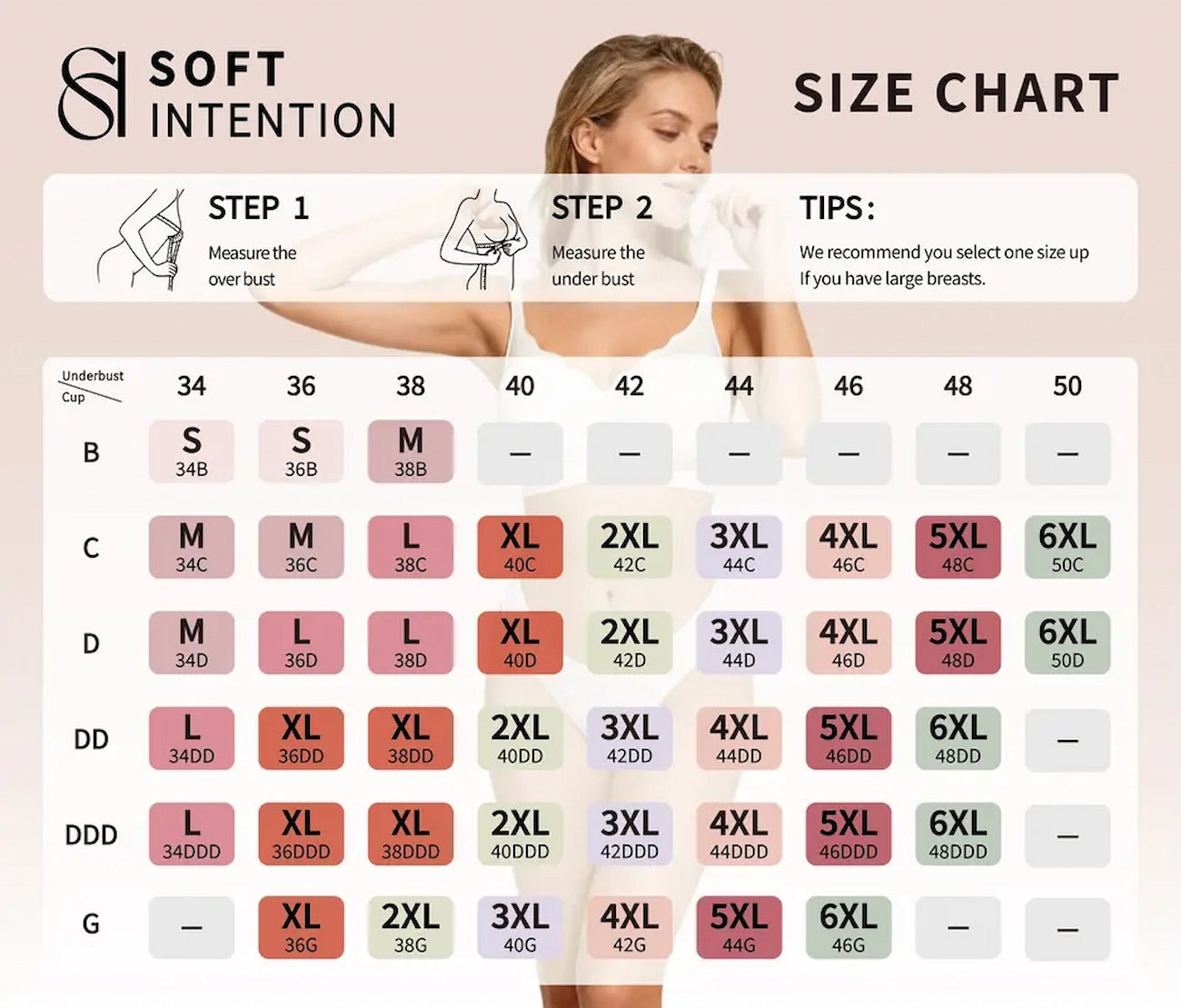
How to Use Soft Intention Size Chart
Finding your perfect-fitting bra just got easier with the our Bra Size Chart. Designed for all bodies—from everyday basics to our fan-favorite Jelly Bra—this guide will help you translate your measurements into our inclusive lettered sizes (S to 6XL) for a fit that feels like a hug, not a hassle.
Step 1: Take Accurate Measurements First
Before using our bra sizing chart, grab a soft measuring tape and take two quick measurements—this is the key step in how to measure bra size accurately. These measurements help you find your ideal band and cup fit so you can choose a bra that feels truly comfortable and supportive.
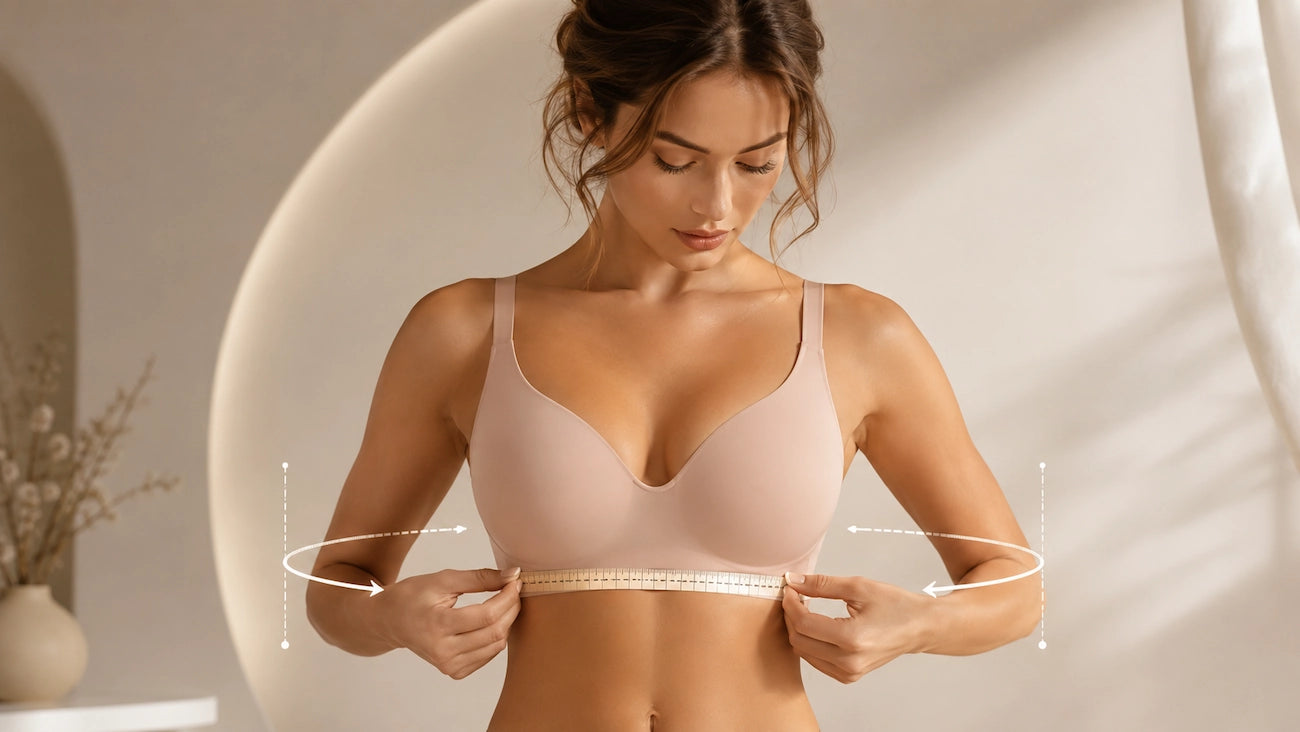
1. Measure Your Underbust (Band Size)
Wrap the tape snugly (but not tight!) around your ribcage, just under your breasts where your bra band sits. Keep the tape level and parallel to the floor, then round to the nearest whole number (e.g., 34, 36, 38, 40). This is your underbust/band size, which aligns with the columns on our chart.
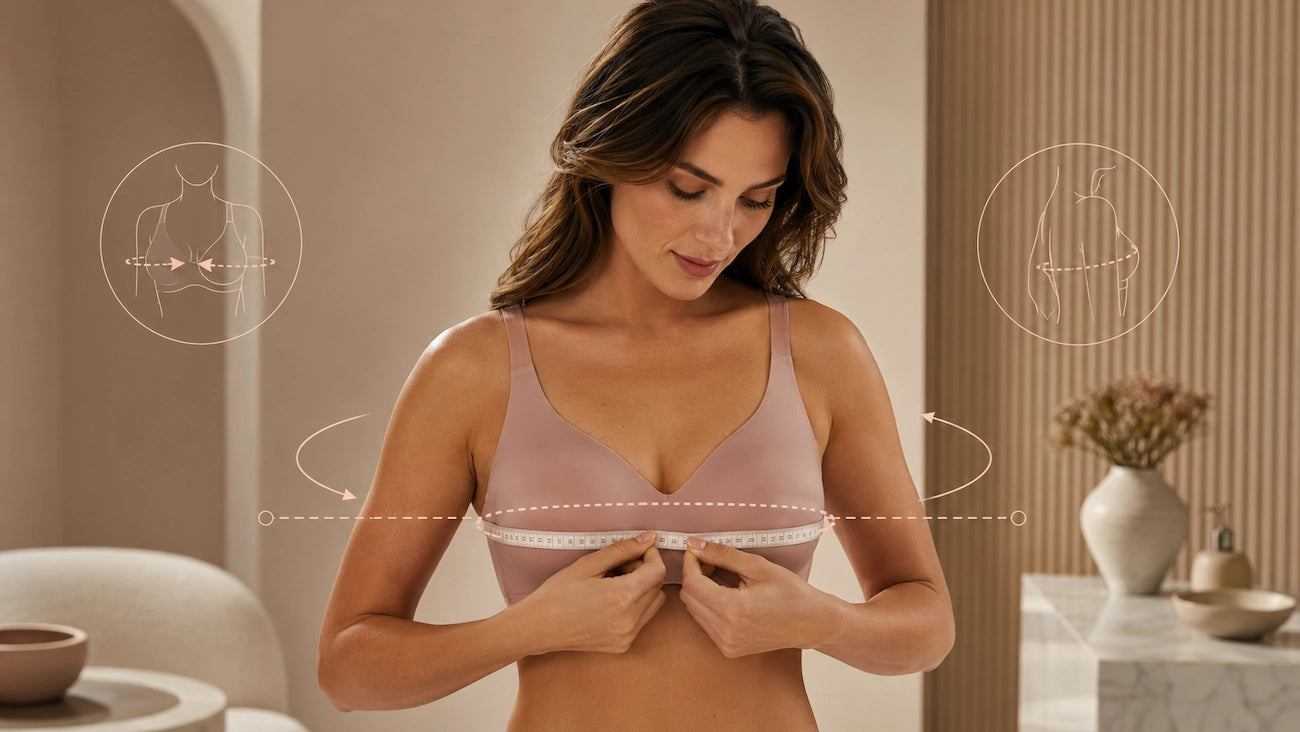
2. Measure Your Bust (Cup Volume)
Next, wrap the tape loosely around the fullest part of your breasts (usually across the nipples), keeping it level. The difference between your underbust and overbust measurements determines your cup size (B, C, D, DD, DDD, G)—the rows on our chart.
Step 2: Find Your Size on the Chart
Our bra size chart is organized to make matching your measurements straightforward:
- Columns: Represent your underbust/band size (34 through 50).
- Rows: Represent your cup size (B, C, D, DD, DDD, G).
- Your Size: Locate the box where your underbust column and cup row intersect—that’s your recommended Soft Intention size!

Find Your Perfect Bra Size by Following Our Video
Shop NowWhy You Should Recheck Your Bra Size Regularly
Your body naturally changes over time, and so does your bust. Factors like weight fluctuations, hormonal changes, pregnancy, aging, and lifestyle shifts can all affect your bra fit—even if you’ve been the same size for years.
That’s why it’s important to measure your bra size regularly instead of relying on a once-done fitting. A bra that once fit perfectly may no longer provide the support, comfort, or shape you need today.
Using a bra sizing calculator or sizing chart periodically helps ensure you’re always wearing the right size. A well-fitting bra improves comfort, enhances support, and helps your clothes fit better—no matter what stage of life you’re in.
FAQs
Why do my bra straps keep slipping?
Your straps may be too long or your cup size could be too big.
Tip: If the cups can’t sit snugly against your body, the straps end up doing the holding. Try sizing down the cup or adjusting the strap length.
Why do my straps dig into my shoulders?
Your band might be too loose.
Tip: When your straps carry too much weight, it’s usually because the band isn’t providing enough support. Check that your band fits firmly around your ribcage — it should stay in place without digging.
Why does my bra ride up in the back?
Your band may be too big.
Tip: A band that moves or rides up indicates it’s not tight enough. A properly fitting band should sit horizontally and feel secure, helping your cups stay in the right position.
Why are there wrinkles or puckers in my cups?
Your cups may be too large.
Tip: When the fabric isn’t filled out by your breasts, it can fold or wrinkle. Consider a smaller cup size or a style with slightly less coverage to smooth the fit.
Why does the center of my bra not touch my chest?
Your cups may be too small.
Tip: Even if the sides or top seem fine, if the center gore lifts away from your body, your breasts are pushing it out. Try going up a cup size to ensure proper support and comfort.
Why does the wire poke or feel uncomfortable?
Your cup size might be off.
Tip: Poking can happen if the wire is too small to fully support your breast, or if a too-large cup allows the wire to shift. Adjusting your cup size up or down usually resolves the issue.