

Your bra size doesn't stay the same forever. It changes during puberty, pregnancy, weight gain or loss, or simply with age. Most women find they wear several different bra sizes over their lives, and that's completely normal.
The average U.S. bra size is 34DD, but because body shape, ethnicity, geography, and age vary so much, that number shouldn't mean much to a single person.
In this guide, we'll take a look at average bra sizes by age, what actually matters, and what the average size really means for an individual.
And remember, "average" is simply a guideline and not a rule.
How to Find Your Right Bra Size the Easiest Way

Before we jump into average bra size by age, it's important you find your right bra size.
Many women wear the wrong-size bras simply because they've never been properly measured. So, before we look at size charts and averages, it's important to learn how to measure yourself.
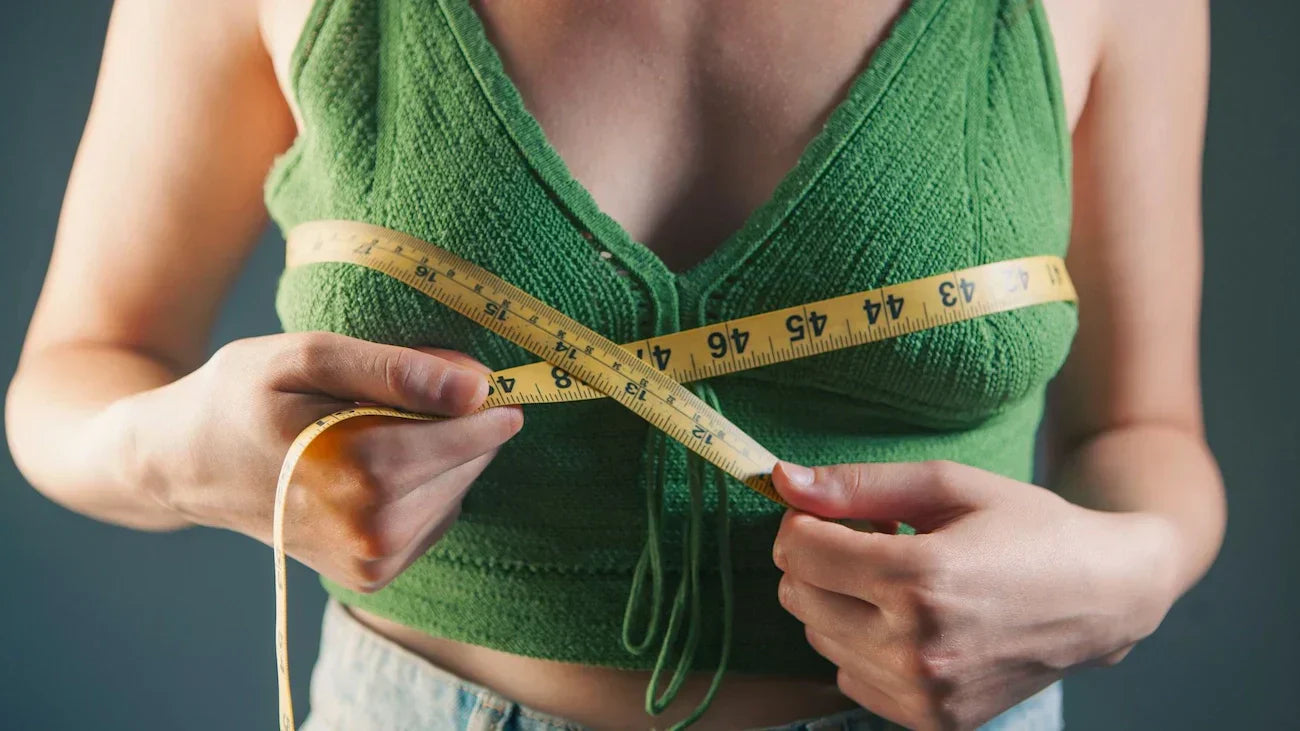
Here's what you will need: a soft measuring tape. You can measure without a bra or with a non-padded bra.
Measure your bust: Standing upright, wrap the tape around the fullest part of your bust. Keep the tape parallel to the floor.
Measure your underbust: Wrap the tape around your rib cage, just under your bust. The tape should be snug and not tight.
Put both these measurements into our bra size calculator to find your perfect fit. No math, no looking at multiple size charts; this is the easiest way to find your right bra size.
Average Bra Size by Age and What Actually Matters

Bra size has nothing to do with your health, attractiveness, or whether your body is "normal.
Genetics, weight, height, ethnicity, and hormones determine breast shape and size.
It's better to wear a 32B that fits properly than a 34DD that doesn't. Comfort, support, and fit will always matter far more than averages.
Below is a general pattern to consider. Remember, this is only a guideline, and many women do not fit a single "average" size for their age.
Quick Reference: Average Bra Size by Age Group
|
Age Group |
Average Band Size |
Average Cup Size |
|
Teens (13-19) |
32-34 |
A-B |
|
20s |
32-36 |
B-D |
|
30s |
36-38 |
C-D |
|
40s and Beyond |
36-40 |
D-DD |
These are general ranges. Your perfect fit may look completely different.
Teens (13-19): Developing Bodies
Breast development during puberty has no fixed timeline. Some girls develop early, others much later. That's why one teenager can look very different from another and still be perfectly normal.
Common sizes for teens are usually between 32A and 34B, with cups typically in the A-B range while they're still growing.
This is a broad range because a 13-year-old and a 19-year-old are both considered teens, but they're at very different stages of development.
Breast asymmetry, meaning breasts not having the exact same size, shape, volume, or position, is completely normal during this stage. One breast may grow faster than the other, but this often evens out over time.
Sizes change quickly during these years due to growth spurts, weight shifts, and menstrual-cycle fluctuations. A bra that fits this month may not fit next month. So, focus on fit over label size.
A proper band and cup fit prevents discomfort far more than any number on a tag. A special note for sports bras in this age group: proper support matters because intense activity without it can cause pain, discomfort, and long-term strain on breast tissue ligaments.
20s: Finding Your Size
Bra size usually becomes more stable in your 20s as puberty-related changes slow and you settle into a baseline. Bands between 32 and 36 and cups from B to D are most common.
Still, changes can happen. Pregnancy often causes significant enlargement of breasts. After breastfeeding, breasts may shrink but may not return exactly to their previous size; some women stay one size larger.
Weight gain or loss also affects breast size because breasts contain fat.
This decade is also when most women begin building a varied bra wardrobe. Wireless styles for lounging, structured ones for work, and sports bras for exercise.
30s: Natural Changes
In your 30s, bands often increase to the 36-38 range, and cups commonly fall in the C-D range.
Weight changes, hormones, and childbirth affect size and shape. Breast tissue density can decrease after breastfeeding even if overall size remains similar.
Many women realize in their 30s that they've been wearing the wrong size. Factors include posture changes from desk work, redistribution of weight, and shifting breast shape.
If you haven't been measured recently, or if life changes have occurred, it's always a good idea to get refitted.
Support becomes a priority here. Wider bands and more structured cups often provide better comfort and support than lighter bras.
40s and Beyond: Menopause and Hormonal Shifts
The 40s and beyond bring major hormonal shifts during perimenopause and menopause, which can change body composition and breast size.
Average band sizes from the 40s onward are often 36-40, with cups between D and DD.
Changes in hormone levels can also affect breast size and shape. Estrogen decline reduces breast tissue density, which changes shape and fullness.
● Breasts may become softer and sag.
● Some women lose size, especially with weight loss.
Both of these outcomes are completely normal.
Because sizes can shift during this phase, getting fitted every 6-12 months is a good idea.
Comfort-focused styles like wider bands, softer cups, and non-underwire options like jelly bras often feel better, since breasts may become more sensitive to underwire.
What "Average Bra Size" Really Means to You

The average U.S. bra size, which is 34DD, comes from a wide range of women of different backgrounds and body types. It offers a reference point; it doesn't define individuals.
A 32B, a 38F, and a 40G are all normal. Bra sizes vary with weight, height, genetics, ethnicity, and importantly, brand. Different manufacturers size differently.
That is why fit is what matters. A well-fitting bra sits flat at the sternum, doesn't dig into your shoulders, keeps the band level around your back, and has no cup overflow or gapping.
If your bra meets those criteria, it's properly fitted regardless of the tag.
At the end of the day, your personal fit is far more useful than any statistic.
Share:
Jelly Bra Reviews 2026: What Real Customers Are Saying
Juneteenth 2026: Celebrating Freedom, Comfort, and Confidence